
Behind the Sirens: Why First Responders Need Mental Health Care Built for Them
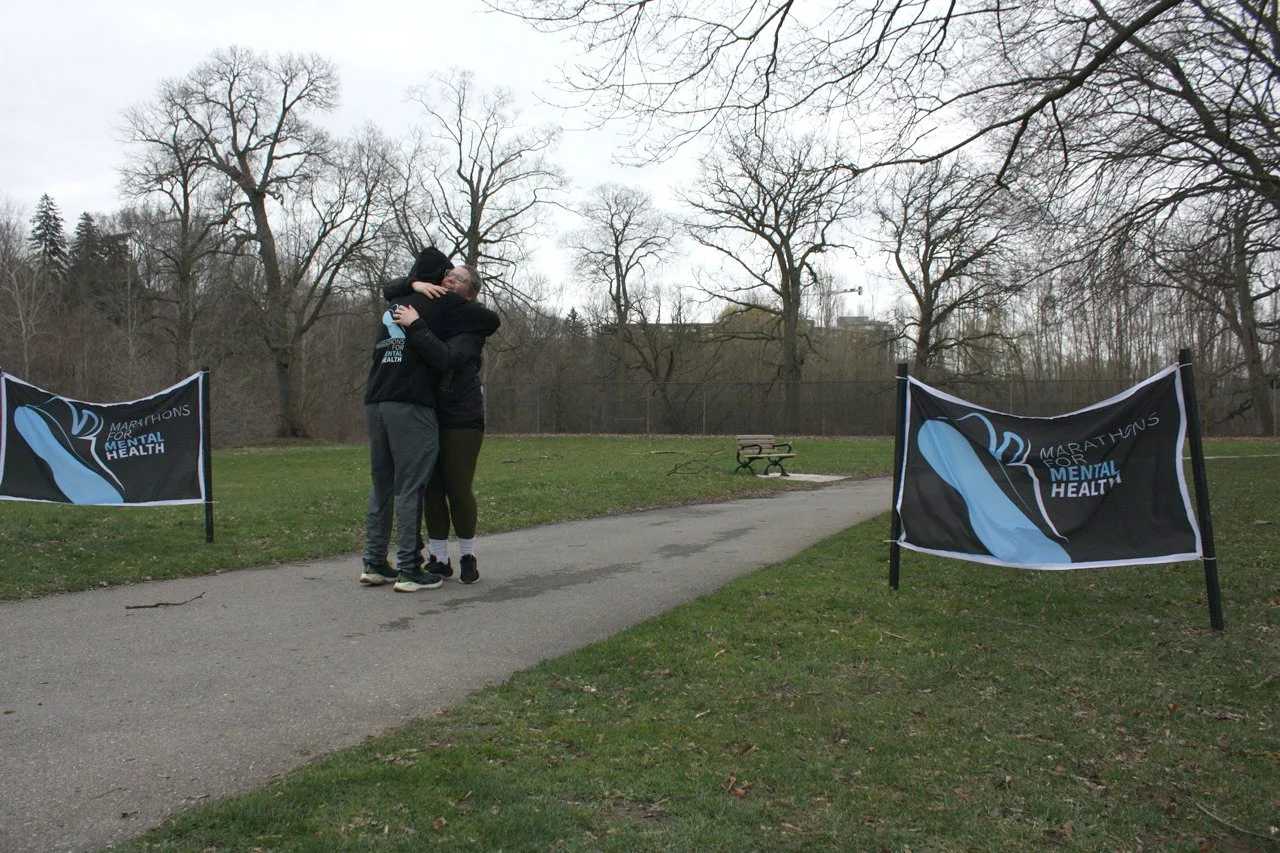
Matthew’s favorite photo from the first Marathons For Mental Health run in 2024
Written by Matthew Pusateri, Founder of Marathons For Mental Health
I remember the first time doing compressions. With the family in the background overlooking and hoping for the best. Then shortly later needing to inform them their loved one is dead and nothing else can be done. Or the first multi-vehicle car crash with multiple casualties on the road while already on 2 hours of overtime. That's the part people don't see when they thank us for our service. They see the uniform. They don't see what we're carrying home in our heads after.
Paramedics, firefighters, police officers, dispatchers, corrections officers — we're routinely exposed to death, serious injury, and people on the worst day of their lives. Most people will go their whole life without seeing what we see in a single shift. And then we're expected to go home, eat dinner, and be normal.
I've sat across from a counsellor and tried to explain a call, and watched their face tell me they didn't get it. Not because they didn't care — because they'd never been there. First responders need someone who already understands the culture and the job before we open our mouths. We shouldn't have to explain why a certain kind of call sits with you for weeks. We should just be able to say what happened.
The stigma around mental health in this line of work is slowly changing, but there’s still work to do. We're trained to stay calm while everyone else is falling apart. That training doesn't turn off when the shift ends, and it makes it hard to admit when we're the ones struggling. I've felt that — the idea that asking for help means you're not cut out for this job. It's the opposite. We'd never tell a colleague to walk it off with a broken leg. A psychological injury deserves the same seriousness.
A couple days after that crash I got a text. Just a "how are you doing" from someone on our peer support team. Not right away — they know you may need time to process it first — but enough that I knew someone had noticed, and that I wasn't expected to just move on to the next shift like nothing happened. That's what real support looks like. Not a poster in the break room. A text, at the right time, from someone who's been there, and properly trained to handle trauma.
Supporting first responders can't just mean a "thank you" after a headline event. It means confidential, accessible mental health care that's part of the job, not something you reach for only once you've hit a breaking point. And this isn't only about the people in uniform — healthcare workers, ER staff, military personnel, social workers, and crisis responders carry the same weight and deserve the same support.
We spend our careers showing up for people on their worst days. We need systems that show up for us too — specialized care, real peer support, and a culture where asking for help is a strength, not a confession.